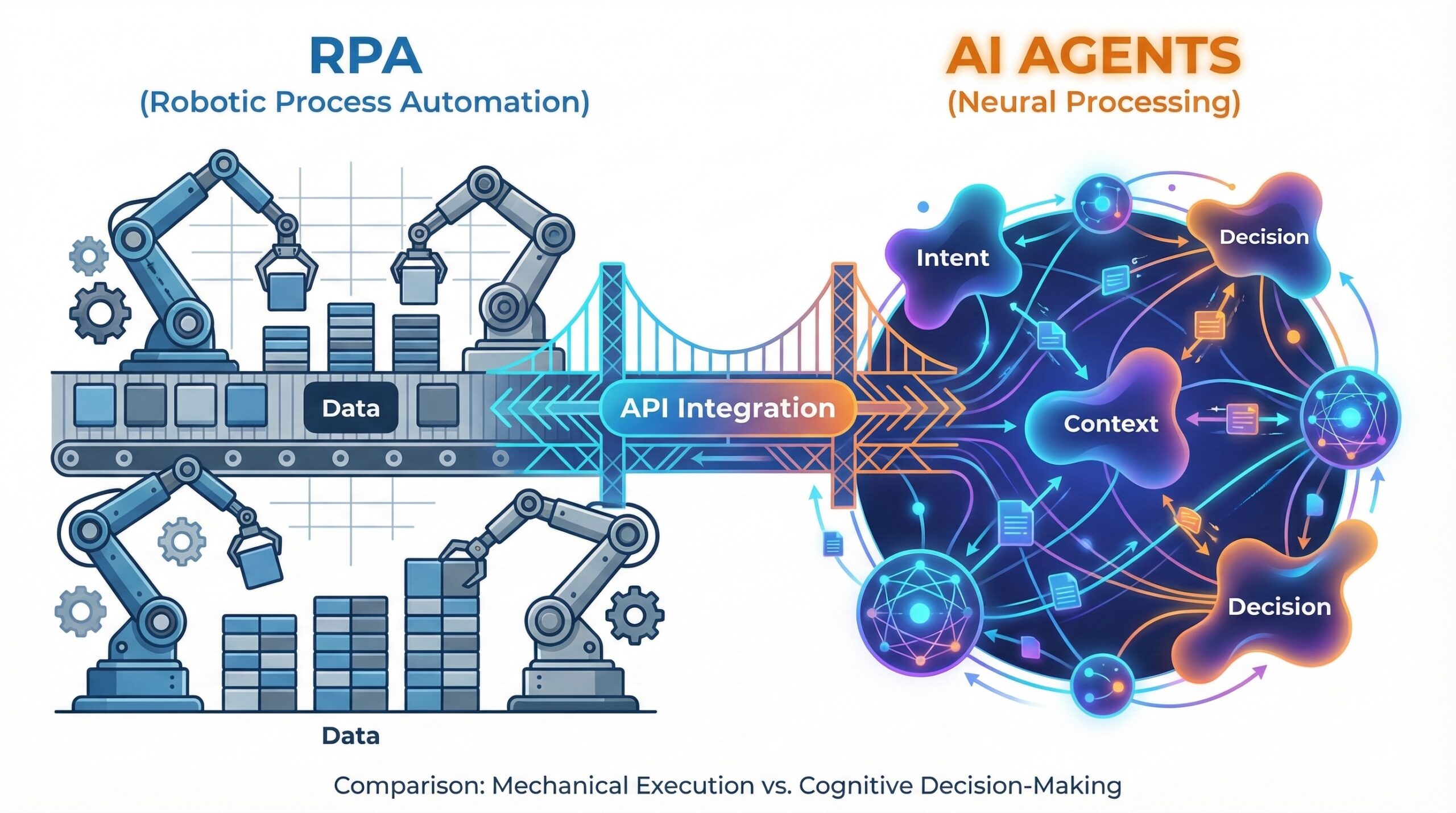
Imagine having a never-sleeping assistant who performs multi-task operations with several software tools, continually optimizing processes on your behalf. This isn’t a glimpse into a distant “Jetson’s”-esque future; it’s happening now. The rapid evolution of AI automation turning from simple scripted workflows into autonomous systems has kicked automation up a gear, upgrading traditional robotic process automation (RPA).
Recently, the tech scene has been alive with developments highlighting a shift from static automation to intelligent AI agents, orchestration platforms, and embedded “co-pilot” systems. Launched agent platforms like Superset and Mostra are providing workspaces where teams can build multi-step, tool-using AI agents instead of single prompts. They are even integrating vector databases and graph backends like Helix DB that give agents the ability to reason over connected data with a memory of previous actions, enabling more reliable long-running automations.
Then we have AI automation platforms like Arzula, focusing on helping businesses create autonomous workflows powered by intelligent agents. These platforms are driving the industry trend toward “agentic automation” where AI reasons about tasks, handles exceptions, and chains various tools together instead of simply following a script.
These significant tech updates are not limited to large overarching platforms. The upgrades are infiltrating everyday productivity and SaaS tools. Zapier’s 2026 review recently underlined a surge of AI-native productivity tools that deftly blend task automation with generative AI. Many of these tools can interpret workflows described in casual conversational language and convert them to automated multi-app flows – a massive leap forward in the usability of automation tools.
Such developments in AI tools and platforms aren’t just theoretical; they are having a tangible impact across industries. Operations and IT, for instance, are experiencing a shift from specific point solutions to an automation fabric spread across all applications, with AI agents acting as a connective layer across various tools. Security and IT operations are also following suit, evolving from simple rule-based runbooks to adaptive, learning-based systems.
The impact of AI automation on business process automation and next-gen RPA is even more significant. Classic back-office duties like invoice processing, CRM updates, and HR workflows are automated by AI+RPA stacks. Even customer support is enjoying the custody of AI agents that can manage all ticket-related operations.
Imagine that you run a SaaS business, and on a given day, multiple software deployment, security scans, CRM updates, and customer support tickets need your attention. Now, with the advent of AI agents and updated RPA workflows, these tasks can be automated with just a few natural language instructions. Thus, freeing your time and attention for brainstorming and strategy development.
The convergence of these two technologies – AI Automation and Robotic Process Automation – is a clear call for business leaders to reimagine their approach to process automation. Companies need to shift from rule-based bots to goal-oriented agents that handle variations and learn from feedback. As such smart automations are updating and accelerating traditional business operations, how about integrating such AI-powered solutions into your business?
In the coming years, we might see a more symbiotic working model emerging with humans and AI-powered automation tools working side by side to streamline processes and drive efficiency. As tech leaders, it’s time to harness the potential of this AI-RPA blend and build a holistic automation layer for the future. After all, wouldn’t it be helpful to hand off some tasks to a digital colleague that never tires and never forgets?